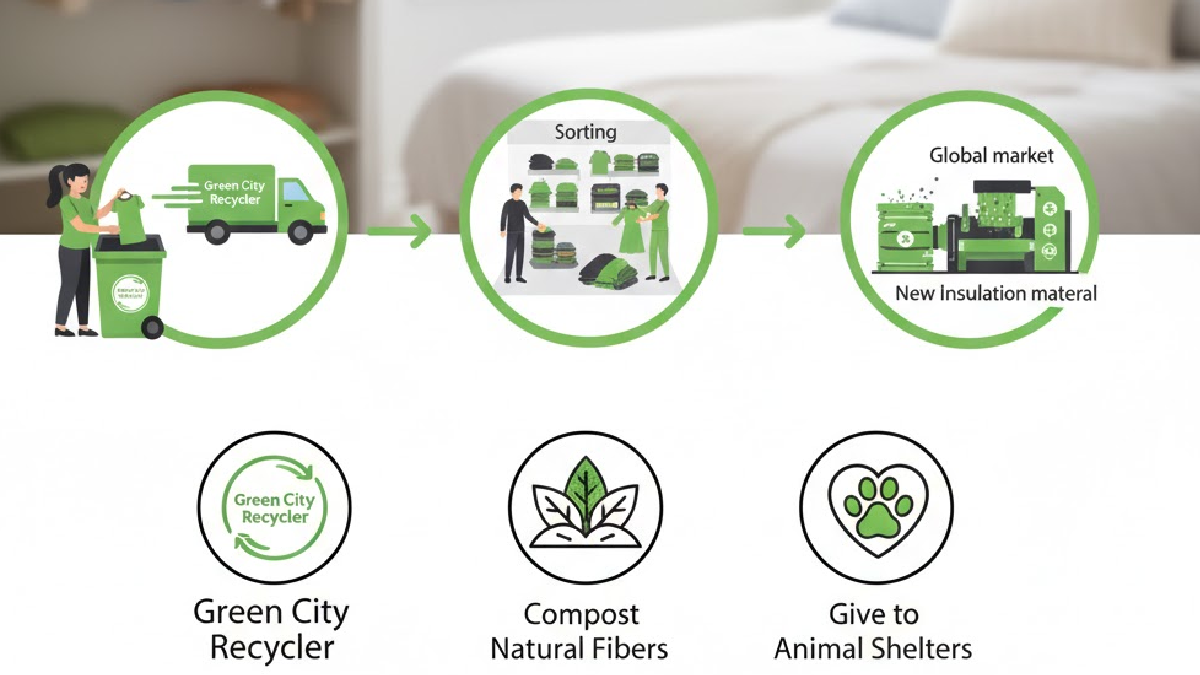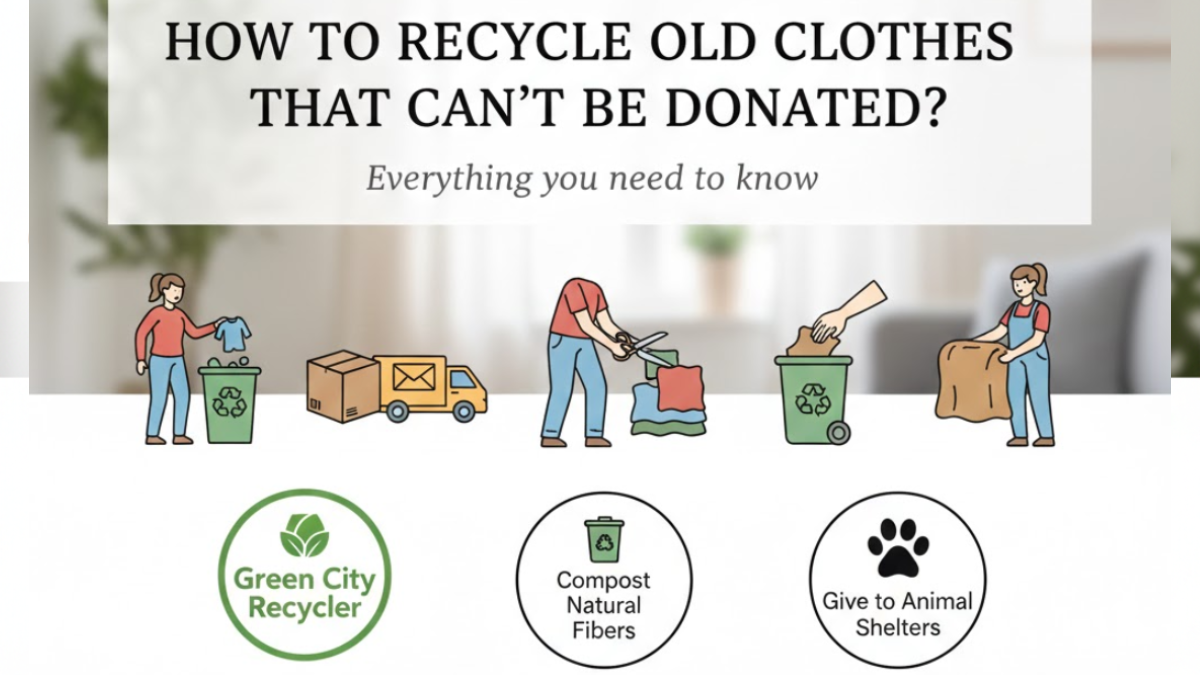

Across the world, clothing waste has been increasing very rapidly. Therefore, it is an important question that has been asked: Can every type of clothing be recycled? Although recycling has been a powerful solution to the textile waste problem, it is still not suitable for every type of fabric. That’s why it is essential that you know your fabric type so that you can recycle it responsibly.
At Green City Recycler, we are promoting textile recycling as the main powerful step towards environmental sustainability. This guide will explain which clothes you can recycle and which are difficult, and why the fabric composition matters so much.
Why Clothes Recycling Is Important:
The first benefit that cloth recycling has is a reduced amount of landfill. With every passing year, there are a million tons of textiles that end up landfill. And they take hundreds of years to be composed. Not only this, but many textiles release harmful chemicals while decomposing.
In addition, when you start recycling cloth they would save water, energy, and raw materials. As a result of it, your recycling of clothes would reduce the environmental damage and support the circular economy. Making raw textile material requires a large amount of natural resources.
Natural Fabrics and Their Recycling Potential:
The fabrics that are natural are generally easier to recycle than other fabrics. The reason for this is that they come from the plant or animal forces, and they can break down more naturally.
● Cotton:
The recycling of cotton has been practised for a very long time. You can turn the old cotton cloth into cleaning cloth, insulation or blended yarns. However, heavy dyeing or blending can make cotton harder to process.
● Wool:
You can reuse wool to make new textiles or use it for insulation. All of this process is also energy-intensive, but still, recycling wool is better than its disposal.
● Linen and Silk:
You can also recycle Linen and Silk but this practice is not very common in recycling streams.
But these materials are biodegradable and also environmentally friendly. The natural fabric remains one of the most efficient textile recycling methods.
Synthetic fabrics: Are they recyclable??
Manufacturers usually use plastic waste materials to produce synthetic fabrics. Therefore, recycling the synthetic fabrics is a complex task.
● Polyester:
Polyester recycling is not impossible, but it requires some specialised facilities. Recycling old polyester cloth can generate new fibres and reduce plastic waste.
● Nylon, Acrylic, and Spandex:
Limited facilities can help recycle these fabrics. However, many standard recycling centres do not accept them due to the processing difficulties they pose. Recycling synthetic textiles can reduce dependence on petroleum-based production.
Fabric Blends: The Biggest Recycling Challenge
The modern cloth is now made from blended fabrics such as cotton-polyester mixes. As the blends that improve durability and comfort, they create major challenges while recycling.
As the fibres must be separated before you start recycling them, this is the reason why many of the centres reject the blended clothes. That’s why these are the products which are preferred to be downcycled into industrial products instead of being fully recycled.
Still, there are new advanced textile technologies that are being developed. In the future, the new techniques of fabric separation may create an improvement for large-scale recycling.
Which Clothes Can Be Recycled Easily?
You can usually recycle:
- 100% cotton shirts and jeans
- Wool sweaters and quotes
- Linen household textiles
You need to make special arrangements to recycle:
- Polyester sports wear
- Nylon-based clothing
The following are the things that you should avoid recycling:
- Clothes that are contaminated with oil or chemicals
- Garments that are full of embellishments
- Mixed materials clocks without separation
For any other accurate guidance to recycle the textile, you can visit Green City Recycler because they provide updated information on everything, especially on Sustainable clothing disposal.
Tips to Improve Clothes Recycling
If you want to recycle more effectively, then:
- Sort the clothes by their fabric types
- Donate your wearable items first
- Try to repair clothes instead of discarding them
- Choose the quality over the quantity while you are shopping
The steps may seem small, but they can create a big environmental impact towards sustainability.
Conclusion:
Not all clothing can be recycled; its recyclability is based on the fabric used, the level of contamination and the availability of textile reclamation facilities. Fibres made from natural materials are generally easier to recycle than those produced from synthetic or mixed fibres. In this instance, they need much more complicated processing techniques.
To reduce textile waste and build a more environmentally sustainable future, the best option is to buy responsibly and work with a textile recycling service just like GreenCityRecycler.