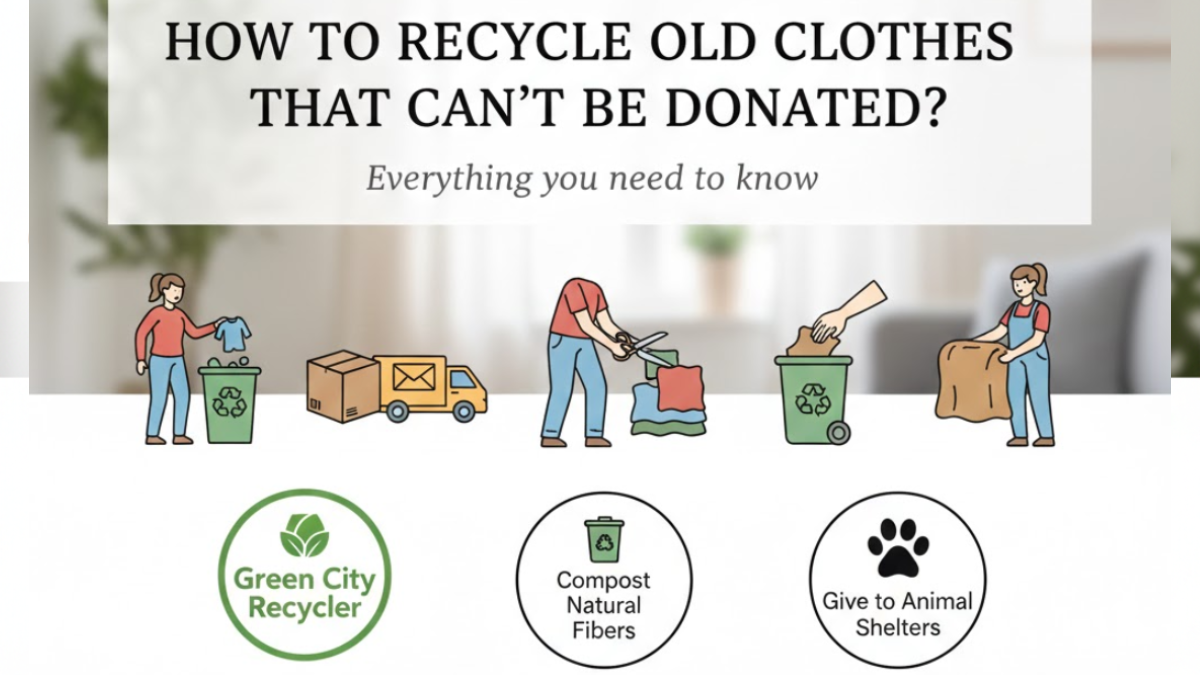
A lot of us have clothes in our wardrobes that we don’t wear anymore. For example, these include shirts that don’t fit, faded trousers, old towels, single socks, and even broken things that we think are “too bad” to give away. A lot of people think these things should go in the trash; however, that’s not true. Most textiles may be reused, repurposed, or recycled.
In this blog, we will discuss how everyday clothes find a new life.
How Green City Recycler Helps?
In fact, they help turn old clothes into something useful again via a simple and community-friendly system. Your old clothes are still useful, even if they become someone else’s favorite outfit, industrial material, or a new textile product.
Therefore, in this blog post, we’ll talk about how Green City Recycler gives new life to old clothes, what their process is like, and how you can help keep this cycle going.
Why Your Old Clothes Are Still Worth it?
How do everyday clothes find a new life? Clothes don’t lose worth merely because they are old or worn out. Instead, there are many techniques to make a piece of clothing last longer:
Reuse: Someone else can wear things that are still in fine shape.
Recycling: Rags, stuffing, insulation, fiber fill, or raw materials can be made from torn or soiled fabrics.
Upcycling is the process of turning old fabric into new things like bags, accessories, or cleaning cloths.
Ultimately, the most important thing is to keep textiles out of landfills, because once they are in the garbage, they can’t be used in a circular economy anymore.
What Makes Green City Recycler Different
Green City Recycler makes it easy, accessible, and effective to recycle clothes. They don’t just leave folks bewildered about where to donate or how to recycle; instead, they give straightforward answers that make sure every item is taken care of properly.
Community Collection Pods
Green City Recycler puts collecting pods close to schools, neighbourhoods, and businesses. Additionally, these pods will take:
- Clothing
- Shoes
- Towels
- Sheets for beds
- Bags
- Textiles that are damaged or stained
- Shoes that are paired and not paired
As a result, this easy access makes individuals more likely to drop things off instead of letting them pile up or throwing them away.
Scheduled pickups
Green City Recycler will pick up your items at your door if you don’t have a pod. Moreover, this is perfect for:
- Households that give a lot of money
- Families with a lot going on
- People who don’t have simple access to transportation
- Schools or businesses that hold donation drives
Consequently, your textiles may start their trip to a new life with only one booking.
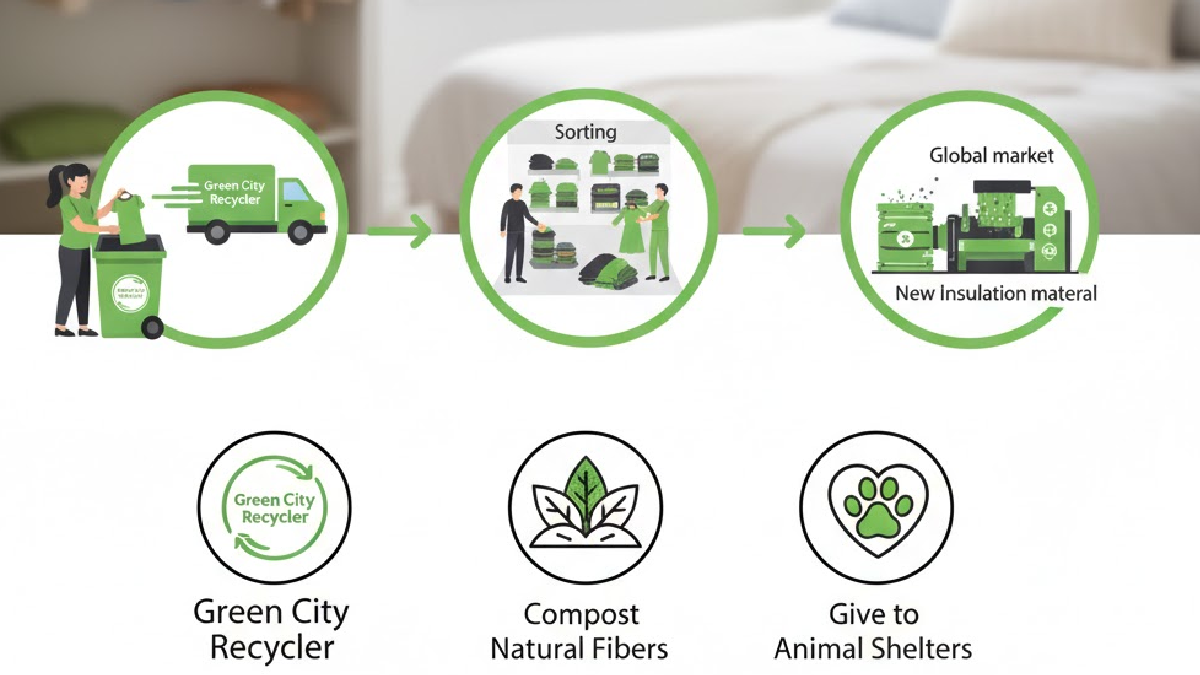
Sorting for reuse and recycling
After everything is collected, it is transferred to a sorting facility where each piece is looked at. Here, the idea is to get the most value out of every piece of fabric.
Items that may be used again are cleaned, sorted by type, and made ready to be sold or given away.
Non-wearable textiles are sent to recycling partners to be turned into rags, insulation, stuffing, or resources for industry.
We sort shoes by how worn they are. Even old pairs can be turned into new materials.
Thus, this method with multiple streams makes sure that nothing goes to waste.
How do everyday clothes find a new life
Use again through global markets
A lot of wearable products end up in thrift stores all around the world. In many cases, someone else might wear the shirt or dress you gave them all the time. Reuse is the best choice for the environment because:
- It makes the item last longer.
- Also, it cuts down on the requirement for fresh production.
- It helps the economies of many areas.
- Your gift can really be a blessing for someone else.
Turning them into cleaning rags for businesses
Not all clothes can be worn again, but they can still be useful. For instance, people regularly utilize old cotton T-shirts, towels, and linens as cleaning rags.
- Shops that work on cars
- Factories
- Cleaning firms
- Businesses in the area
These rags take the place of single-use items, therefore cutting down on waste at all levels.
Making new things out of old things
Damaged clothes and textiles made of different fibers can be mechanically recycled, which means that they are:
- Cut up
- Made into fibers
- Used as cushioning, insulation, or filling
Eventually, some fabrics can even be used to make new fabric in the future. That ripped pair of pants might one day be used to fill a cushion or make an insulating panel.
Why is it Important to Recycle Old Clothes?
Cuts down on trash in landfills
Every year, millions of tons of textiles are thrown away. However, recycling keeps a lot of clothes out of landfills, where they let out methane and add to pollution.
- Helps the environment by saving resources
- To make fresh cotton, polyester, or mixed fabrics, you need:
- Water
- Power
- Chemicals
- Oil (for making synthetic textiles)
Therefore, recycling cuts down on the requirement for fresh resources and pollution from factories.
Helps the circular economy
A circular system makes sure that things are used for as long as possible. We don’t employ the “wear and throw” concept; instead, we use “reuse and recreate.”
Adds value to the economy and the community
Recycling helps:
- Jobs in the area
- Markets for used things
- Fundraisers for the community
- Businesses that care about the environment
- Overall, it helps both people and the earth.
How to Get Involved in the Movement
How do everyday clothes find a new life? Switching to a circular textile industry doesn’t mean giving up a lot. Rather, here are some things you can do to help:
Clean up your closet often
Sort your clothes into these groups every two to three months:
- Wearable
- Able to be fixed
- Can be recycled
- Make a bag just for donating clothes.
Use Green City Recycler Pods
- Find the closest collection pod and leave whatever you no longer need there.
- Keep in mind that goods that are broken are also okay.
- Make a reservation for a free pickup
- Schedule a pickup at home if you have a lot of stuff if there isn’t a pod nearby.
- Give your community support
Ask your:
- School
- Workplace
- Business in the area
- Association of neighbors
- to hold a collecting drive or textile recycling pod.
- Buy used things when you can
- Buying used things lowers the need for new fabrics and helps circular systems.
- Tell Others
Tell people on social media how you recycle. Additionally, get your friends and family to join in.
Conclusion: You Are the Future of Fashion
We don’t realize how much our everyday clothing is worth, but how do everyday clothes find a new life? In reality, you don’t have to throw away a damaged blouse, a faded dress, or a single shoe. You can recycle them, reuse them, or repurpose them.
Green City Recycler is working on a system that keeps textiles in circulation, which is good for communities and the environment. Therefore, you can be a part of a good, long-lasting change just by giving away clothes you don’t desire.