One of the largest pollution-causing industries in the world is fashion. As the clothing waste keeps increasing, there is an important need for sustainable solutions more than ever. This is why there are discussions on certain techniques like upcycling, downcycling, and recycling in fashion. Although many people use these terms interchangeably, each of them is very different, and you need to know the differences.
Green City Recycler is promoting responsible textile management. That’s why you have to understand the difference between these three practices. When you know the difference between them, it will help you make smarter, eco-friendly choices.
Why Sustainable Fashion Practices Matter:
Every year, millions of tons of textile waste are discarded. Most of this waste ends up in landfills or is incinerated. Because of it, they emit harmful gases. And because of it, the environmental damage and pollution keep increasing.
Moreover, to produce the new clothes, you require a lot of things like water, energy, and raw materials. But the techniques like upcycling fashion, recycling the cloth, and downcycling the textiles help in reducing the overall environmental impact.
What Is Recycling in Fashion?
Recycling in fashion basically means that you have to break down your old clothes or textiles into raw materials. And after you have converted them into the raw materials, then you can use them to create a new product. This process may require chemical or mechanical methods.
For example, if you have cotton clothing, you can shred it into fibers. And after it, you can reuse it in new fabric blends. Similarly, recycling facilities can process polyester garments and turn them into recycled polyester yarn.
But anyway, recycling has its own limitations. It is very difficult to recycle the blended fabrics because you need to separate them. Not only can this repeated recycling also weaken the fibre. Still, textile recycling significantly reduces the land fill waste and resource consumption.
What Is Downcycling in Fashion?
When you want to create products of lower quality or reduced value from the old clothing, this process is known as downcycling. In this process, the recycling method does not fully preserve the original fabric’s strength and quality.
Likewise, industries can use other damaged textiles as carpet padding or stuffing materials.
Also, downcycling creates a new product. It still prevents them from ending up directly on land. And because of this, down cycling is considered a better option as compared to disposing of textiles, but it is less effective than recycling.
What Is Upcycling in Fashion?
The most creative and value-driven approach is upcycling in fashion. Rather than you breaking down the materials, old or unused cloth is being transformed into new and higher-value products.
For example, designers can turn your denim jeans into designer bags, jackets, or home décor items. Also, if you have any out did it item, you can convert them into trendy fashion pieces.
Upcycling is all about your creativity and craftsmanship. The major benefits of upcycling include reducing waste, saving resources, and adding uniqueness.
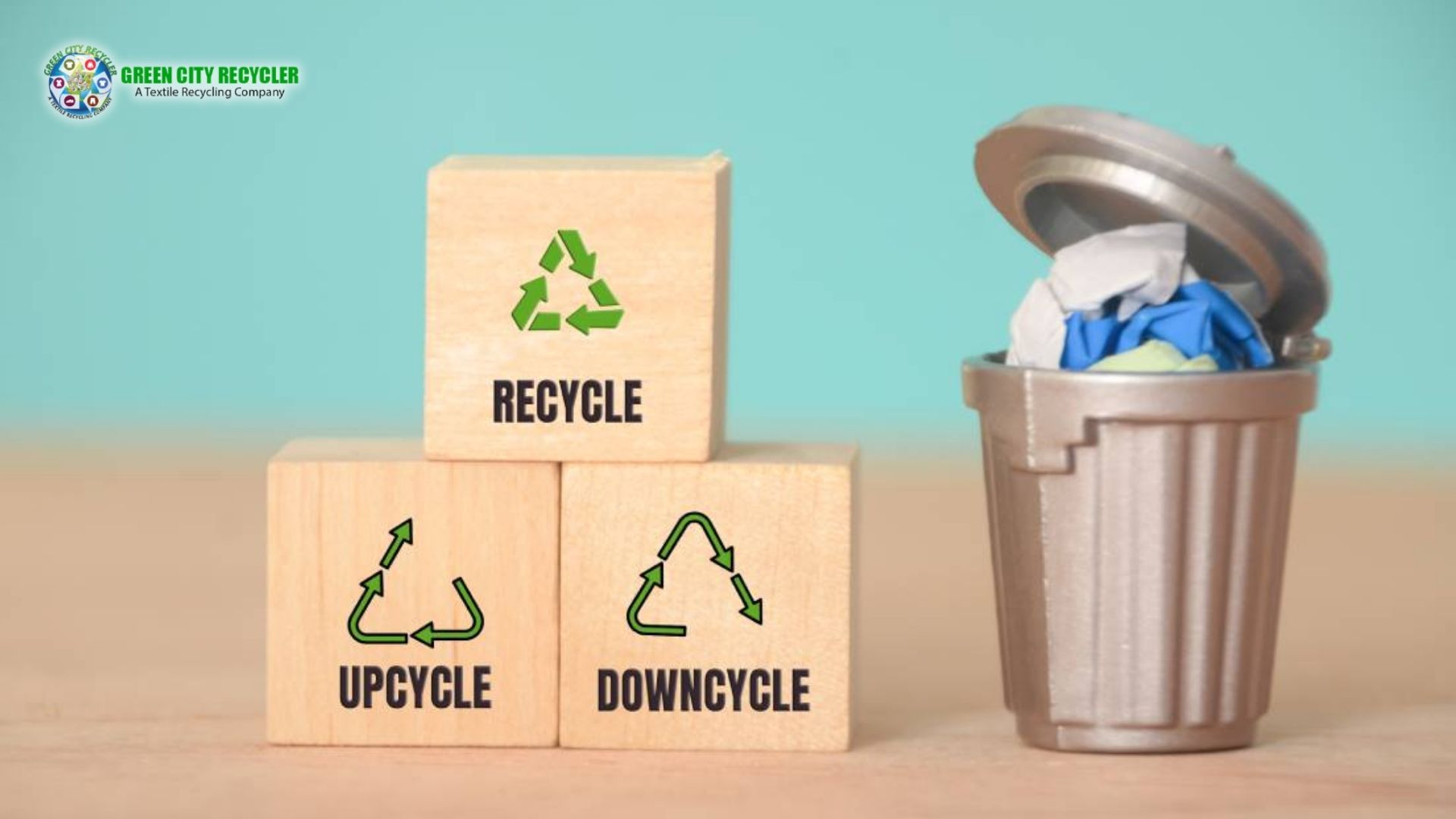
Key Differences Between Upcycling, Downcycling, and Recycling:
Materials are reused in different ways among the three approaches:
- Recycling uses the materials to create new items by breaking the material down into a usable form.
- Downcycling transforms the old textile into a new item of a lower quality.
- Upcycling is the process of turning old things into something new and more valuable.
While all three methods contribute to the reduction of textile waste, upcycling produces the largest benefit to the environment, as well as creates a greater opportunity for creativity. Regardless, each method has an appropriate use based on fabric condition and available resources, with recycling, downcycling, and upcycling being equally valuable.
How You Can Support Sustainable Fashion:
- Buying fewer, higher-quality clothes
- Supporting brands that use recycled materials
- Donating or upcycling old garments
- Using textile recycling services responsibly
Please, action would help you reduce the fashion waste and environmental harm collectively.
Conclusion:
You have to understand the difference between upcycling, downcycling, and recycling in fashion because it is essential for sustainable choices. As recycling and downcycling help you manage the waste, upcycling would add creativity and value to old clothing.
When you start adopting these practices and try to learn from trusted sources like Green City Recycler, no one can stop you from moving towards a cleaner and more sustainable fashion industry.


