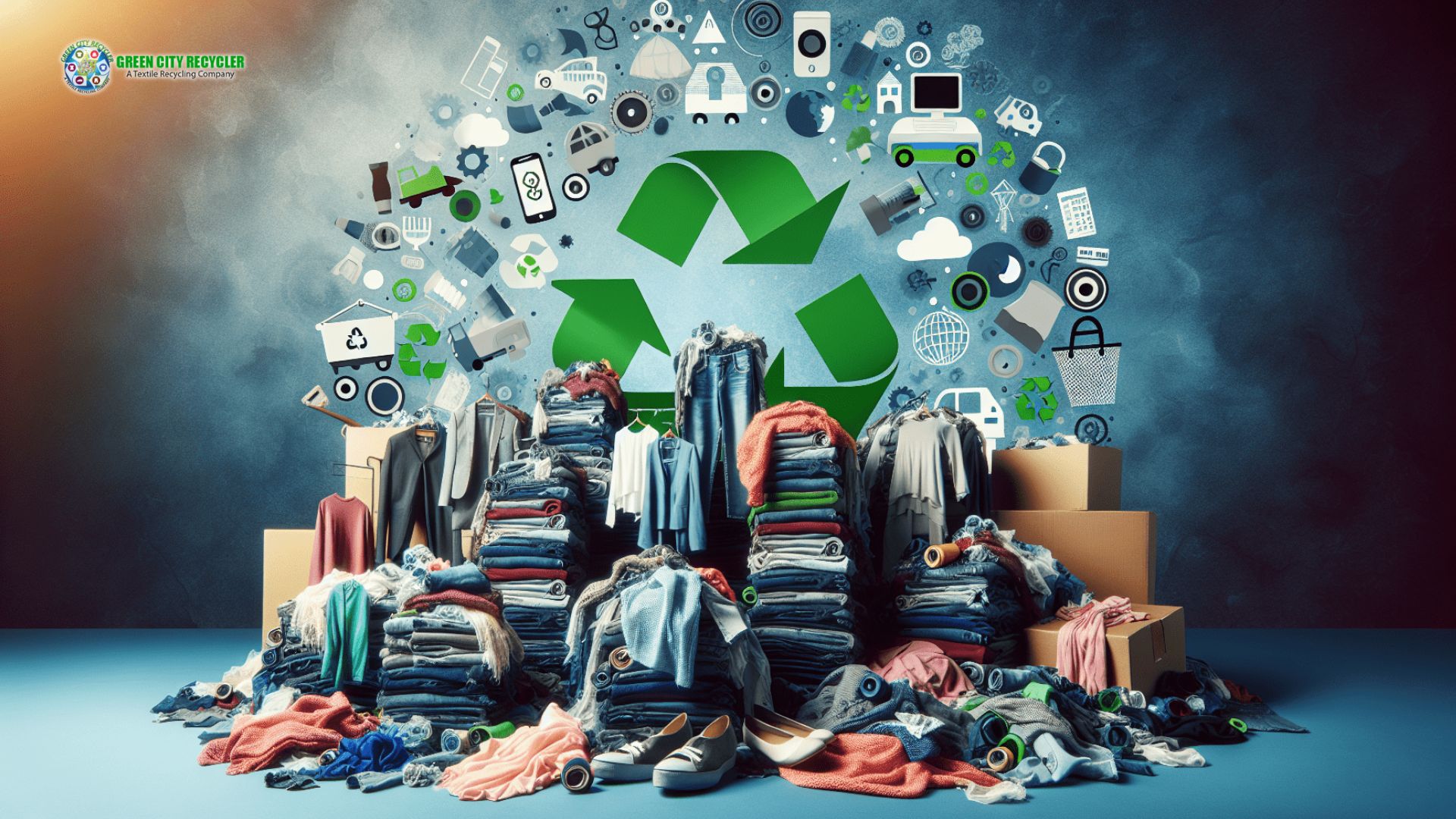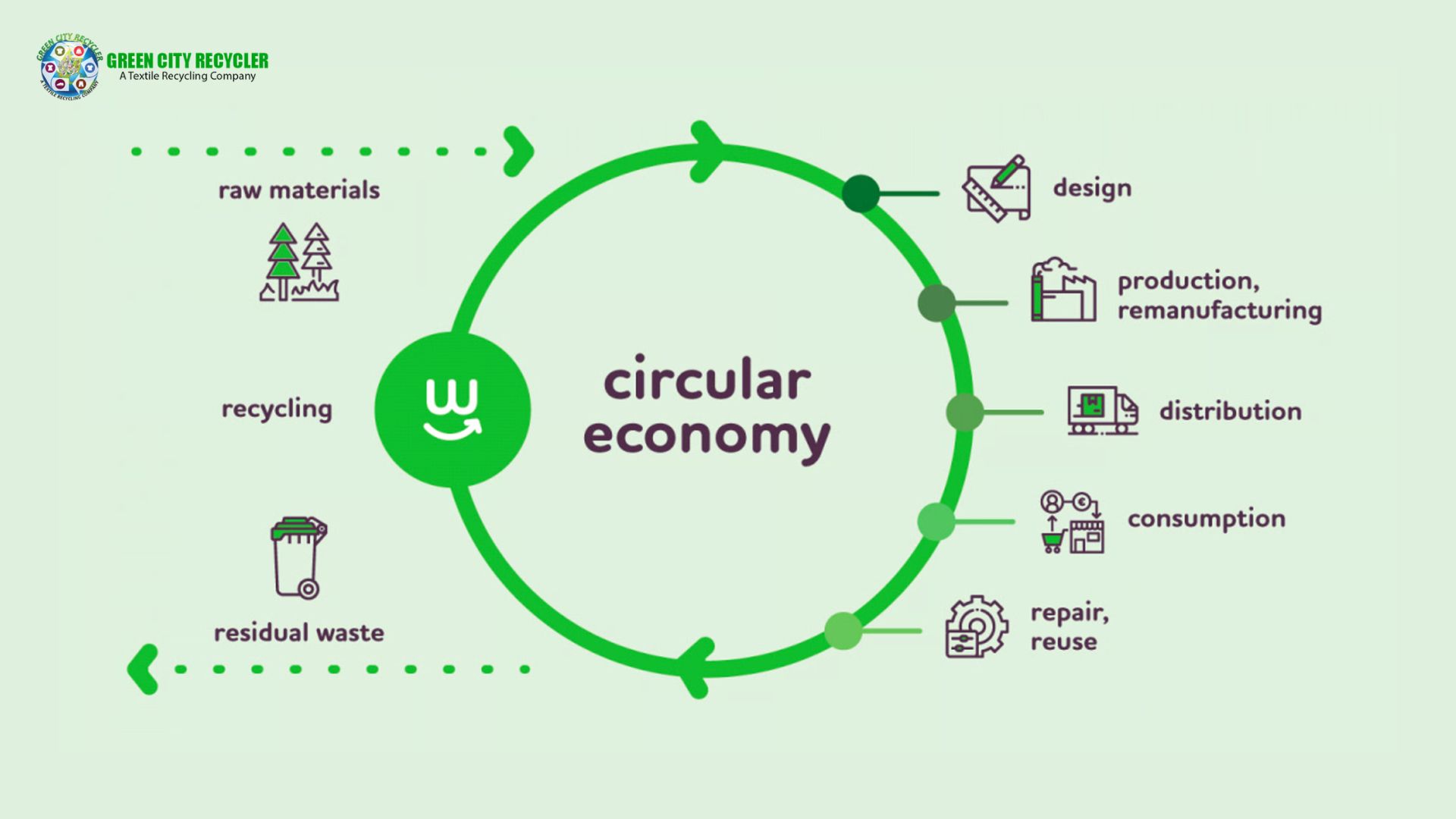
A lot of trash comes from the fashion and home textiles businesses. Every year, millions of tons of clothes and linens wind up in landfills. But almost all of that stuff may be reused, repurposed, or recycled. A circular textile industry keeps fibers and clothes in use longer, makes new goods out of old textiles, and cuts the environmental cost of our clothing choices by a huge amount.
One group that is attempting to build a Circular Textile Economy is Green City Recycler. They collect, sort, and send discarded clothes back into productive supply chains instead of sending them to the landfill.
Why Circular Textile Economy Important?
Building a circular textile economy is important for these reasons
- Textiles take up room in landfills and let out greenhouse gases when they break down.
- A lot of clothes can still be used, or they can be turned into rags, insulation, stuffing, or raw materials for new fibers.
- A circular strategy saves resources like water, electricity, and chemicals, cuts down on pollution, and provides jobs and value for the community
These enormous benefits are why local collection and reuse programs are just as important as big-brand recycling programs.
What does Green City Recycler do?
Green City Recycler offers textile collection and recycling services that make it easy for people and businesses to get rid of unwanted clothes, shoes, linens, and other home textiles without throwing them away.
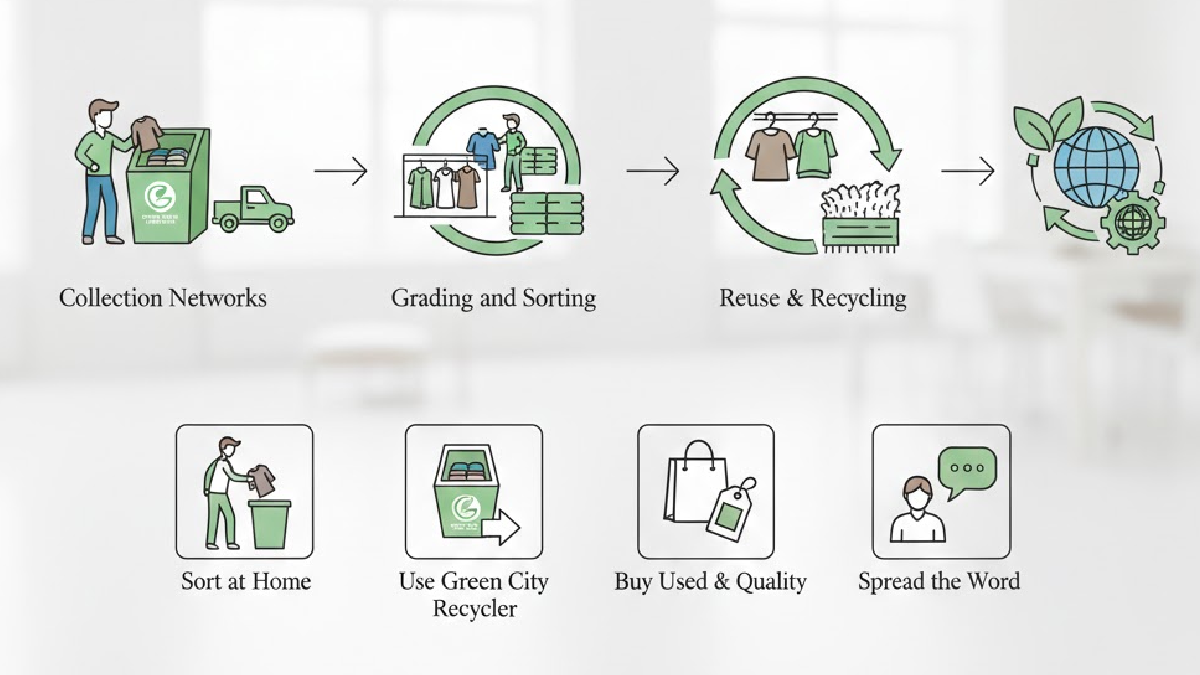
They have drop-off pods and pick-up services, work with schools and companies, and separate everything they collect into streams for reuse and recycling. Good-condition items are sold for reuse. Broken or worn items are recycled into rags or industrial feedstock like shredded denim for insulation or fiber recovery.
The Workflow Process
Collection networks: visible donation pods and alternatives for picking up items at home or work make things easier while also preventing textiles from being discarded.
Community partnerships: Schools and local businesses host pods in exchange for money or exposure, increasing awareness and collecting more things.
Grading and sorting: Items are graded (reuse, resale, rags, or industrial feedstock) to find the best new life.
Even textiles that are discolored or damaged are accepted and used again instead of being thrown away.
How Green City Recycler helps make local circular networks work
Green City Recycler doesn’t merely shift clothes from one place to another. It helps in building a Circular Textile Economy through
developing a firm: infrastructure and by following practices that a circular economy needs:
Awareness and education: working with schools and communities to show people how to recycle textiles and why it matters.
Donation pods and collection: make textile disposal easy, which is usually difficult.
Economic return: partners and communities can sell reusable items and give people incentives to raise money.
Easy steps to join the circular textile business
Every little amount helps, so don’t be an expert. You can apply this basic checklist today:
- Sort at home by keeping a small bag or box for clothes you don’t want. Put things that can be worn and things that are broken in different piles so you can decide where each one should go.
- It’s easy to donate by using local collection pods or scheduling a pickup. Green City Recycler will take most textiles, including those with stains or small tears.
- Make donations useful by washing them when you can and putting shoes together. This helps them go to reuse markets faster
- Support drives at your child’s school, office, or favorite local company by encouraging them to arrange a pod or collection day. Partners typically gain credit for raising money and getting the word out.
com - Choose clothes that are of higher quality and will last longer, and buy them used when you can. This will lower the demand for new materials.
- Utilize old clothes for something else at home. For example, you might utilize old t-shirts as cleaning rags, old jeans as patches, or old materials for creative projects. If you don’t want to retain them, you can recycle them through a service that takes damaged clothes.
- Let your community know where you leave things and why. Word-of-mouth is a strong way to get people in your area to start collecting.
What will happen when to start donating
When you put things in a Green City Recycler pod or set up a pickup, they usually get sorted at a collection center first. People who still want to wear clothes can sell or give them to markets and organizations that repurpose clothes. People turn lower-quality goods into rags, industrial wastes, or feedstock for operations that recover fibers.
This multi-stream method cuts down on waste and makes sure that each piece of clothing gets the most valuable next usage.
Last Words
When communities start donating items regularly, it doesn’t take long for one household to pick through a bag of clothes they don’t want every few months. Green City Recycler’s concept of Building a Circular Textile Economy, which includes easy-to-use drop-off pods, collaborations with schools, and a clear path for sorting and reusing, is a good example for cities that want to cut down on textile waste and create green jobs in their own communities.
Are you ready to join us?
Since Green City Recycler makes it easy to avoid shipping textiles to landfills, and join a community-wide circular solution. You may drop off unwanted clothing at a nearby pod, schedule a pickup at your home, or ask your school or office to host a collection. Therefore, recycling every item you can helps make the city cleaner and more sustainable, as well as the globe.